
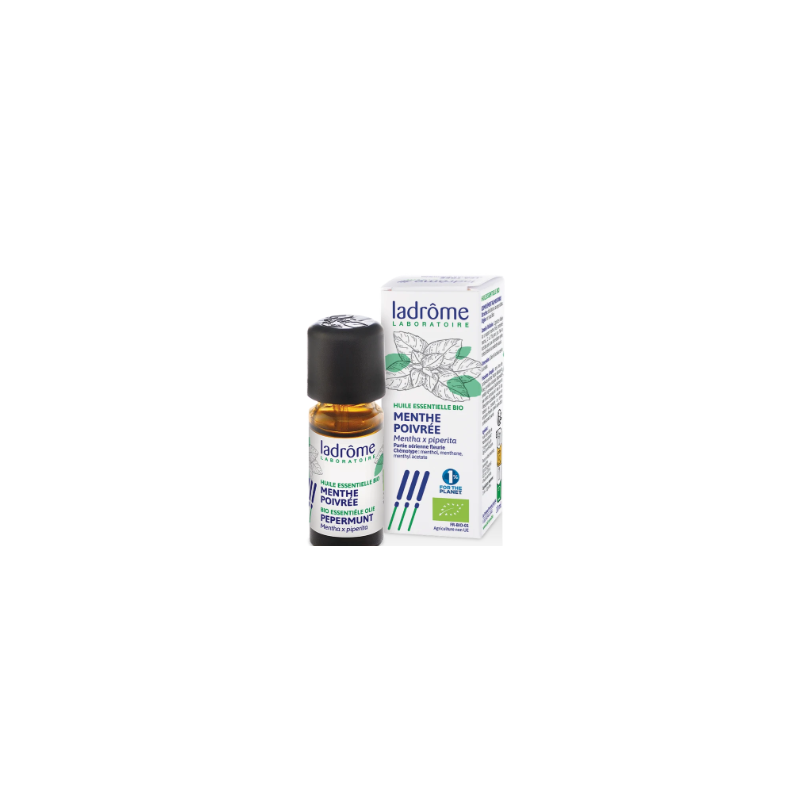

Peppermint essential oil accompanies well-being routines focused on digestion, vitality and minor daily ailments

Secure payment

Fast delivery, careful packaging

Efficient customer service
About 25 species of mint are described. Peppermint is a small, sterile, hybrid perennial plant. Its stems, slightly reddish and quadrangular, carry opposite leaves, oval, in sawteeth. Peppermint essential oil is almost colorless. It has a powerful, penetrating, fresh and spicy smell.
Peppermint essential oil is known for its digestive, antispasmodic, analgesic, anesthetic, hypertensive and antimicrobial properties.
Mentha x piperita Botanical family: Lamiaceae Distilled part: aerial flowering part Chemotype: menthol, menthone, menthyl acetate
Toning and refreshing action: Stimulates concentration and brings a feeling of immediate freshness.
Digestive properties: Helps to relieve bloating, nausea and facilitates digestion.
Headache relief: Applied to the temples, it provides a refreshing and soothing effect.
This essential oil can be used in several ways:
Diffusion: Add a few drops in a diffuser to purify the air and refresh the atmosphere.
Topically: Dilute with a vegetable oil to massage the temples in case of headaches, or on the stomach to promote digestion.
Inhaling: Add a few drops to a bowl of warm water to inhale the vapors and clear the airways.
Internal use: On medical advice, it can be used to help digestion (1-2 drops diluted in a vegetable oil or honey).
Keep out of reach of children. Do not exceed the recommended daily intake. Not recommended during pregnancy and lactation and for children under 8 years old. In case of accidental absorption, consult a doctor or contact a poison control center. Seek advice from a healthcare professional.

Specific References
Peppermint essential oil accompanies well-being routines focused on digestion, vitality and minor daily ailments