
- New
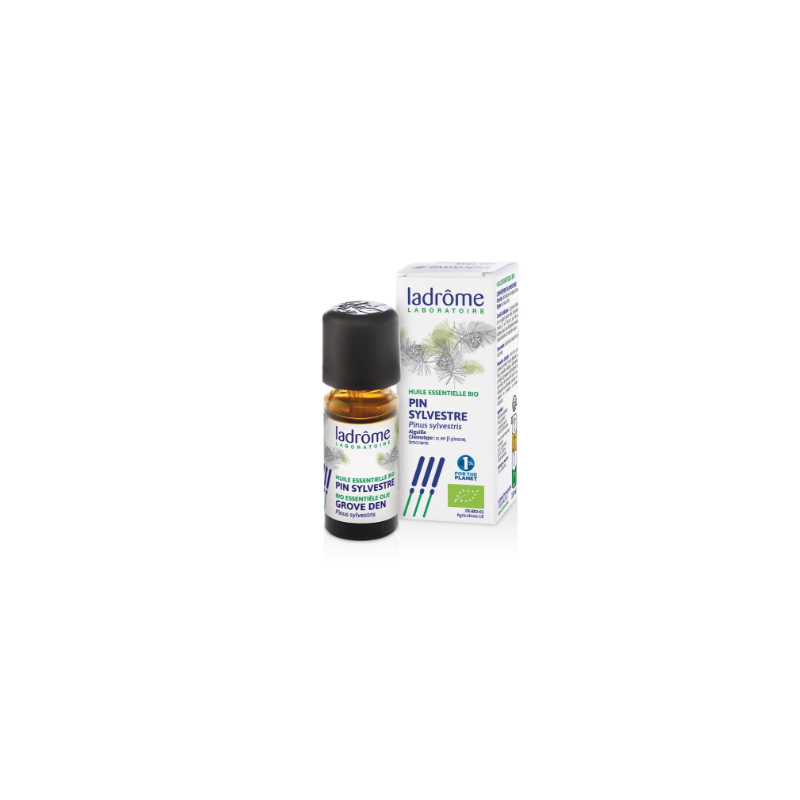

The essential oil of Scots pine is a powerful natural purifier, ideal to revitalize the air and provide a feeling of woody freshness and invigorating. Its invigorating aroma is perfect for stimulating energy and concentration, while cleaning up the environment.

Secure payment

Fast delivery, careful packaging

Efficient customer service
The Scots pine is a large conifer with scaly, chapped brown bark. Symbol of longevity, it can live 150 to 300 years, or even 600 years, alone. The essential oil, derived from the distillation of needles, is colorless and highly aromatic.
Scots pine essential oil is known for its tonic, hypertensive, anti-inflammatory, antimicrobial, expectorant and pulmonary antiseptic properties.
Pinus sylvestris Botanical family: Pinaceae Distilled part: Chemotype needle: α and β pinene, limonene
Respiratory comfort (winter & fresh air)
Traditionally used to help clear the breath, Scots pine essential oil is often chosen as a diffusion, gentle inhalation or friction (always diluted) when the air is charged and you are looking for a feeling of freer breathing.
Fresh air at home
In short atmospheric diffusion, its forest smell helps to clean the atmosphere and neutralize bad odors, ideal in living rooms.
Tonus & invigorating effect
Its aromatic profile rich in monoterpenes gives it a stimulating note, useful when looking for a breath of fresh olfactory (morning, tiredness, change of season).
Cutaneous application (always diluted)
For well-being friction, dilute in a vegetable oil (apricot kernel, jojoba, sweet almond...). Classic dilution: 2% (≈ 2 drops per 5 ml of vegetable oil). Sensitive skin: 1% (≈ 1 drop per 5 ml). Avoid the face and eye area. Do a skin test 48 hours before first use.
Dissemination
Place a few drops in a diffuser, in short sessions (e.g. 10 minutes), then air out. Very pleasant in synergy with Lemon, Ravintsara, Tea tree or Fir.
Inhalation (mild)
Occasional dry inhalation: 1 drop on a tissue, breathing from a distance a few breaths. Stop in case of discomfort.
Keep out of reach of children. Do not exceed the recommended daily intake. Not recommended during pregnancy and lactation and for children under 8 years old. In case of accidental absorption, consult a doctor or contact a poison control centre.

Specific References
The essential oil of Scots pine is a powerful natural purifier, ideal to revitalize the air and provide a feeling of woody freshness and invigorating. Its invigorating aroma is perfect for stimulating energy and concentration, while cleaning up the environment.