
- New
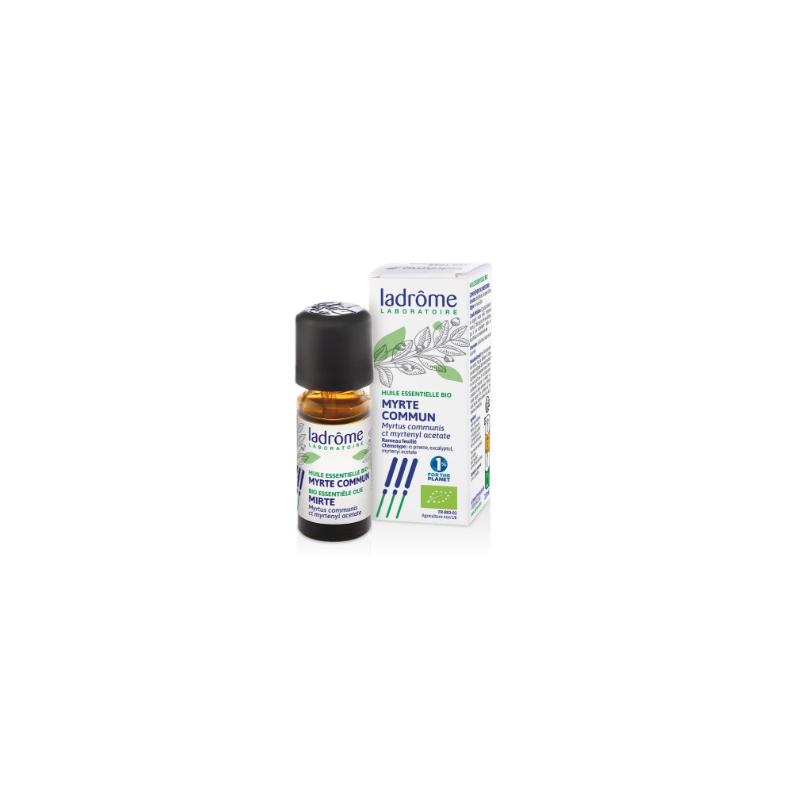

The essential oil of common myrtle has a fresh, slightly camphorated aroma; it is often chosen as a diffusion of "pure air" and in diluted massage for the sensation of light legs.

Secure payment

Fast delivery, careful packaging

Efficient customer service
The myrtle, an evergreen shrub or shrub, has oval and leathery leaves. The flowers are white. The fleshy, ovoid fruits become bluish-black when ripe. Myrtle is native to North Africa and also grows in southeastern France, Corsica, Spain and Italy.
The essential oil of common myrtle is known for its lymphatic and venous decongestant, antispasmodic, expectorant, anti-infectious and immunostimulating properties.
Myrtus communis ct myrtenyl acetate Botanical family: Myrtaceae Distilled part: leafy branch Chemotype: menthol, menthone, menthyl acetate
Sensation of lighter legs
Traditionally used as a venous and lymphatic decongestant, red myrtle is a great classic of wellness synergies for tired legs (diluted massage, moving from the ankles to the calves).
Respiratory comfort & healthier air
Thanks to its aromatic profile, it is also appreciated in diffusion for a "fresh air" atmosphere and in cold season for a freer breathing sensation.
Digestive well-being (traditional approach)
Its use is sometimes cited as antispasmodic in traditional practices, but the use is done with caution and respecting the recommendations of use.
Dissemination
Pour a few drops into a diffuser, in short sessions (eg 10 minutes), then air out. Ideas for synergies: with Citron (zesty note) or with Ravintsara/Eucalyptus radiata for a cooler atmosphere.
Cutaneous application (always diluted)
Dilute in a vegetable oil (jojoba, sweet almond...). Simple mark: 1 to 2% (≈ 1 to 2 drops per 5 ml of vegetable oil), then massage locally. Avoid the face, eyes, and mucous membranes. Perform a skin test 24–48 hours before the first use.
Internal use:
On medical advice, it can be used to clear the airways (1 drop diluted in a vegetable oil or honey 3 times a day).
Keep out of reach of children. Do not exceed the recommended daily intake. Not recommended during pregnancy and lactation and for children under 8 years old. In case of accidental absorption, consult a doctor or contact a poison control center. Seek advice from a healthcare professional. Do not use for more than 2 consecutive weeks.

Specific References
The essential oil of common myrtle has a fresh, slightly camphorated aroma; it is often chosen as a diffusion of "pure air" and in diluted massage for the sensation of light legs.