
- New
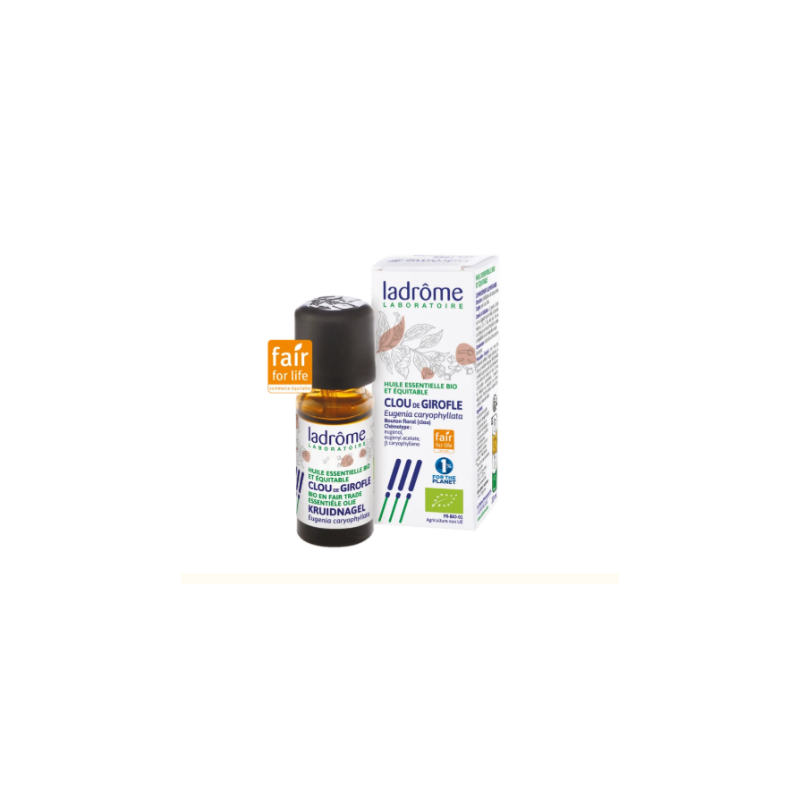

Its warm, spicy and very powerful smell makes it a reference used in aromatherapy as well as in perfumery and even in dentistry

Secure payment

Fast delivery, careful packaging

Efficient customer service
The clove, native to the islands of the Indian Ocean, is an evergreen tree about ten meters high, with smooth brown-yellow bark. To obtain cloves, the flowers in bud are harvested; they are dried in the sun until they become brown-red. Widely used in the culinary arts, cloves were once used to preserve meat and fish. The essential oil, with its powerful and spicy smell, is used in aromatherapy but also in dentistry and perfumery.
The essential oil of cloves is known for its antibacterial, antiviral and antifungal properties.
Eugenia caryophyllata Botanical family: Myrtaceae Distilled part: floral bud (nail) Chemotype: eugenol, eugenyl acetate, β caryophyllene
Digestive comfort (carminative)
Cloves are appreciated to help in case of slow digestion, feeling heavy or bloating, especially after a hearty meal.
Tone and vitality
Its aromatic profile rich in eugenol makes it an oil often cited as "tonic", useful when looking for a feeling of energy and dynamism.
Natural defenses (traditional use)
In aromatherapy, clove is also associated with "anti-infectious" and sanitation uses, to be reserved for regulated uses, as it is a very powerful oil.
This essential oil can be used in different ways:
Diffusion: Add a few drops in a diffuser to purify the ambient air and create a healthy environment.
In local application: Dilute 1 drop in a vegetable oil to apply it on the affected area (for example, in case of dental pain).
Mouthwash: Add 1 drop in a glass of water to relieve mouth discomfort.
Keep out of reach of children. Do not exceed the recommended daily intake. Not recommended during pregnancy and lactation and for children under 8 years old. In case of accidental absorption, consult a doctor or contact a poison control center. Seek advice from a healthcare professional.

Specific References
Its warm, spicy and very powerful smell makes it a reference used in aromatherapy as well as in perfumery and even in dentistry